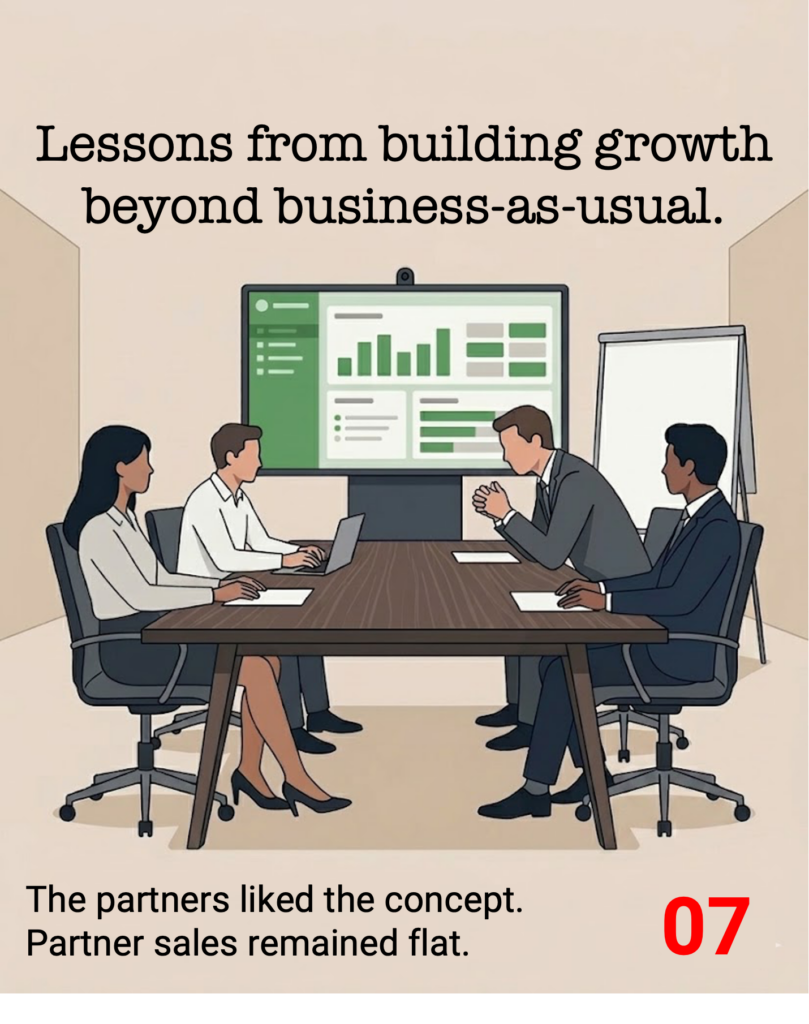
The growth team of a building systems company was reviewing the market launch of a new modular bathroom concept. The value proposition was clear: shorter installation time, fewer coordination issues, and improved quality control on construction sites.
The technical package was ready. The reference project looked clean. The sales regions and two regional partners had given positive feedback after the launch workshop. The team felt confident.
Then the slide with partner sales appeared. Almost nothing had moved. The Head of Market Development looked at the slide for a while and said: “They like the concept. But they still sell the old way.”
The sentence landed hard because everyone knew the partners. Good relationships. Good intentions. No visible resistance. The issue was not partner willingness. The issue was that the concept had not changed how they sold.
I asked the team to put two documents next to each other. First, the launch deck. It explained the new concept as an integrated solution. Second, the partner RFQ template. This was the document partners used every day to respond to customer requests.
The gap became visible without much explanation. The launch deck sold a modular concept. The RFQ template still broke the offer into familiar components, line items, and installation steps.
Until then, the discussion had been about partner enthusiasm: more launch events, better installation videos, more reference material. Useful work. But it did not address the key assumption. The team had validated partner interest. They had not validated partner behavior. The positive feedback from the launch workshop now looked incomplete. The partners had liked the concept. But the idea had not yet entered the documents, conversations, and routines that shape daily selling
Questions senior managers often ask in this context:
Why aren’t our partners selling our new solution?
Partners may genuinely believe in the new solution but still default to familiar selling routines. Growth stalls when the new offer has not become part of the tools, documents, incentives, and customer conversations that drive everyday selling.
How do we know whether our partners have really adopted the new way of selling?
Positive feedback after launch events is not enough. Real adoption becomes visible when partners qualify opportunities differently, prepare different quotations, position the solution differently, and change how they engage customers.
What should we check before investing into a partner-led growth strategy?
Before investing more, check whether partners have changed their day-to-day sales process. The key question is not whether they like the concept, but whether they now sell differently because of it.