An industrial SaaS company wanted to launch a new industrial IoT module for asset-heavy customers. The module helped site teams spot weak signals earlier, plan interventions better, and avoid costly interruptions.
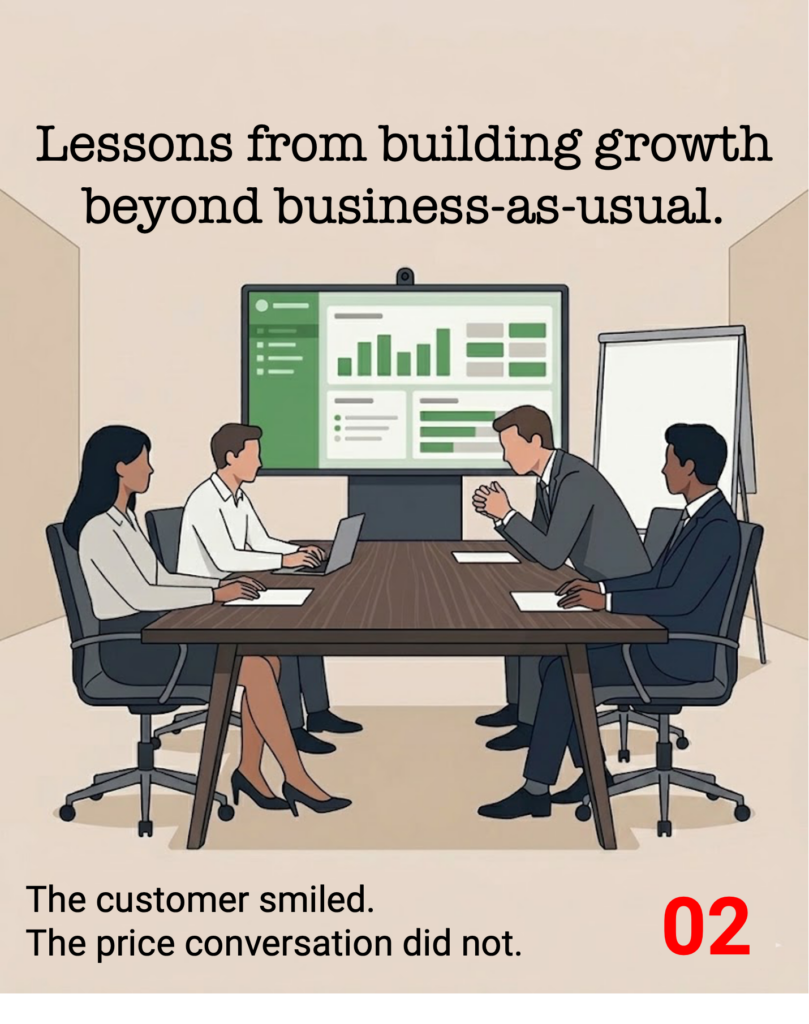
I was invited to a monthly progress meeting. The first interview results sounded strong.
One customer operations lead said the module solved a problem his team had discussed for years. Another asked for access before the pilot period had ended. The number of RFQs looked good on the slide.
Then Finance asked a plain question. “How many customers have paid or will pay at the price point we have in the business case?”
The room slowed down. The project lead opened the pipeline view. Three customers had signed the pilot agreement. Some were in the post-demo stage. A few asked for a demo. Two had asked for technical details. But whenever the price entered the discussion, the tone changed. The same people who had praised the module now needed budget approval, procurement review, and an internal business case to prioritize against other initiatives.
I asked the team to leave the pipeline view on screen. Then we separated two things: customers who liked the idea and customers who had committed budget. That changed the conversation.
I wrote one sentence on the whiteboard: “For this to scale, customers pay for the outcome.” Until then, the team had discussed interest: more interviews, better demo material, a sharper story. Useful work, but not the key assumption. The team had validated relevance. They had not yet validated willingness to pay.
After this insight, the interview quotes lost some of their comfort. They still showed interest. They did not show a path to paid adoption at scale.
Questions senior managers often ask in this context:
Why can a growth initiative with strong customer interest still miss the business case?
Because interest does not prove that customers will pay the price assumed in the business case. Customers may like the solution, request demos, and see the value — but still push the price into budget reviews, procurement pressure, or lower-priority trade-offs.
How can senior managers test whether customers will pay the assumed price?
They should look for evidence that customers accept the commercial logic, not just the product story. Strong signals include budget owner involvement, price-specific discussions, paid pilots at meaningful price points, procurement engagement, and customers building an internal business case around the expected outcome.
Why are positive demo reactions not enough to justify scaling?
Positive demo reactions show that customers understand the idea and may see its relevance. They do not prove that customers will accept the price assumed in the business case. Before scaling, teams need evidence that customers move from interest to budget commitment at the target price.