How to Turn Growth Ambitions Into Material New Growth
A growth ambition enters an organization that is already optimized to deliver today’s business.
Business Units have performance commitments. Functions work within capacity, process, and budget constraints. Leadership must allocate scarce capital and management attention. People driving growth beyond the Core may need new capabilities, different processes, new incentives, or exceptions to the existing system.
These tensions are inherent.
Without explicit choices about the trade-offs, even strategically important growth initiatives can stall along the way.
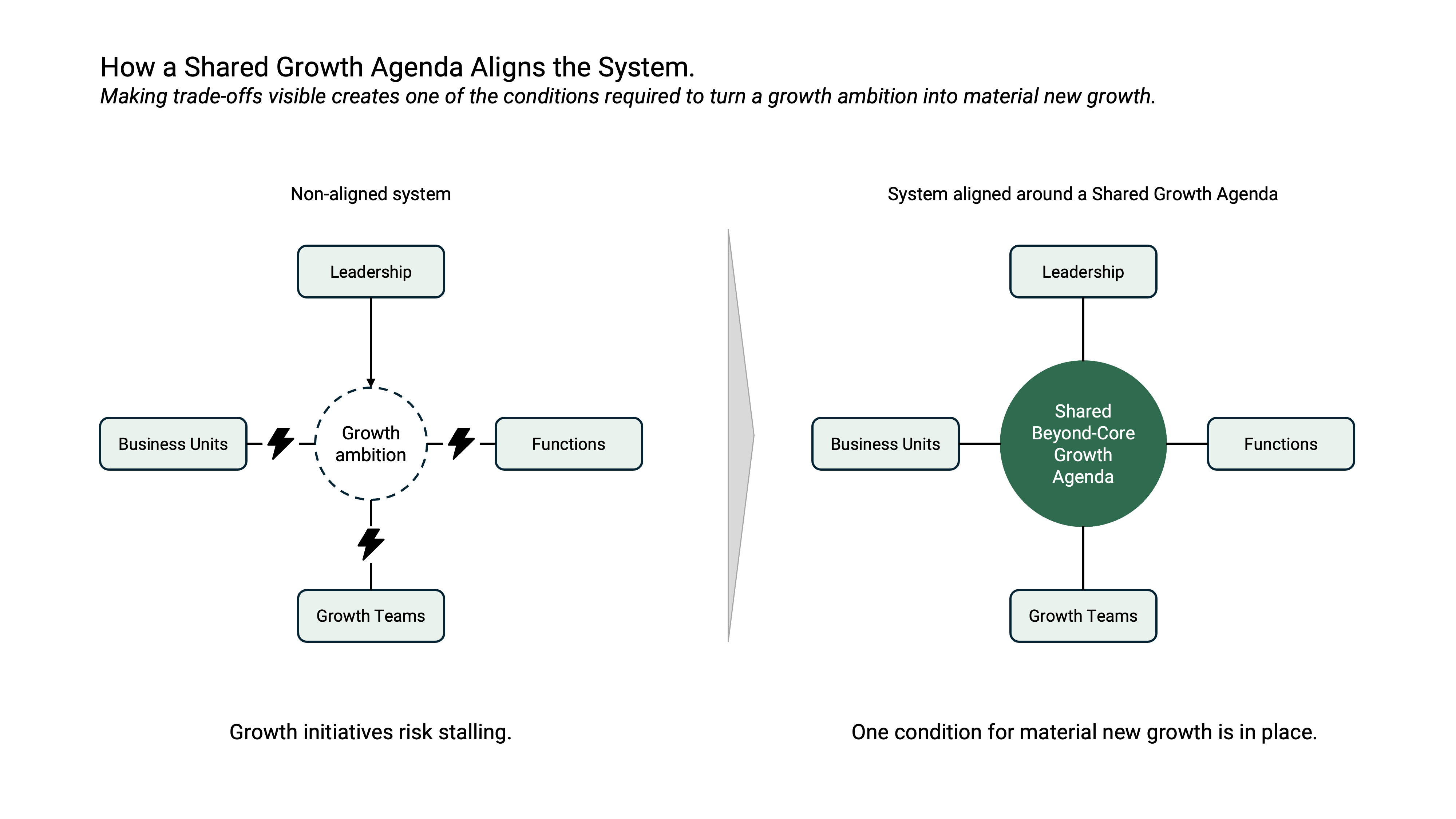
A Shared Beyond-Core Growth Agenda gives Leadership, Business Units, functions, and the people driving new growth a common basis for deciding what the company wants to pursue, what it is prepared to put behind it, and what it is prepared to change.
The Problem
A Business Unit can genuinely support a beyond-Core growth ambition while it must prioritize current revenue, margin, and operating commitments.
A function can see the value of an initiative while protecting scarce people, systems, and budgets.
Leadership can endorse an opportunity while remaining uncertain about how much capital or organizational capacity it deserves.
If these tensions are resolved separately, initiatives start negotiating their way through the organization one constraint at a time.
The company may have a clear growth ambition, but the goals, incentives, resources, and operating constraints around that ambition are not yet aligned.
A portfolio shows which initiatives exist. It does not resolve the trade-offs between new growth and the Existing Business.
Is Your Growth Initiative a Hidden Bet? →
The Opportunity
A Shared Beyond-Core Growth Agenda makes those trade-offs visible.
It creates a shared view of:
This turns individual frictions into management choices.
A Sales incentive may work perfectly for the Core but discourage a new offering. A Business Unit may support an opportunity but lack the capacity to absorb it under current targets. A function may become the bottleneck for several initiatives at once.
The agenda does not remove the trade-offs. It makes them visible enough to manage.
The Solution
The Shared Beyond-Core Growth Agenda becomes the place from which goals, incentives, resources, funding, governance, capabilities, and ownership can be aligned.
The choices differ from one growth priority to another.
Some may require dedicated resources. Others may need changes to incentives, decision rights, or funding. Some may depend on capabilities that still have to be built. Others may require a clearer future organizational home.
How to Turn Beyond-Core Growth Initiatives Into Material New Growth →
How to Build Ownership for a New Growth Business Before Scaling →
The aim is not perfect alignment. It is to make the choices explicit and align the relevant parts of the company around the growth it has chosen to pursue.
What Changes?
Leadership is no longer deciding only:
“Do we like this opportunity?”
It can ask:
Business Units can see where the growth agenda touches their targets, resources, capabilities, and future ownership responsibilities.
Functions can distinguish between isolated requests and requirements that follow from agreed growth priorities.
And people driving growth beyond the Core have a clearer view of what evidence and progress are required before stronger support becomes justified.
That reduces the risk of strategically important initiatives stalling between ambition and execution.
Make It Work for You
Take your current beyond-Core growth agenda and ask:
Frequently Asked Questions
Why do growth initiatives stall even when they fit the strategy?
Because strategic fit does not remove the trade-offs created by the Existing Business. Business Units still have revenue and margin commitments. Functions still operate within capacity and budget constraints. Leadership still has to allocate scarce capital and attention. If those trade-offs remain implicit, initiatives can stall while every part of the organization is acting rationally against its own objectives.
What is a Shared Beyond-Core Growth Agenda?
A Shared Beyond-Core Growth Agenda is a common view of which growth priorities matter most, what they require from the organization, where they conflict with current goals or constraints, and what the company is prepared to change or commit. It turns broad growth ambition into explicit management choices.
How is a shared growth agenda different from a portfolio of growth initiatives?
A portfolio shows what the company is working on. A shared growth agenda also makes clear what the company is genuinely prepared to support, change, build, or stop in order to create growth. It therefore connects the portfolio with the surrounding management system.
What needs to be aligned around a beyond-Core growth agenda?
Depending on the opportunity, alignment may be required across goals, incentives, resources, funding, governance, decision rights, capabilities, and future ownership. The purpose is not to eliminate all tension. It is to make the trade-offs explicit enough to manage deliberately.
Who needs to be involved in creating the shared growth agenda?
Leadership, the relevant Business Units, key functions, and the people driving growth beyond the Core all need to contribute. Each brings a different reality: strategic priorities, current business commitments, functional constraints, and evidence from the emerging opportunities. That shared view is what allows meaningful trade-offs and commitments to be made.