How to Turn Beyond-Core Growth Initiatives Into Material New Growth
You have a growth target to deliver.
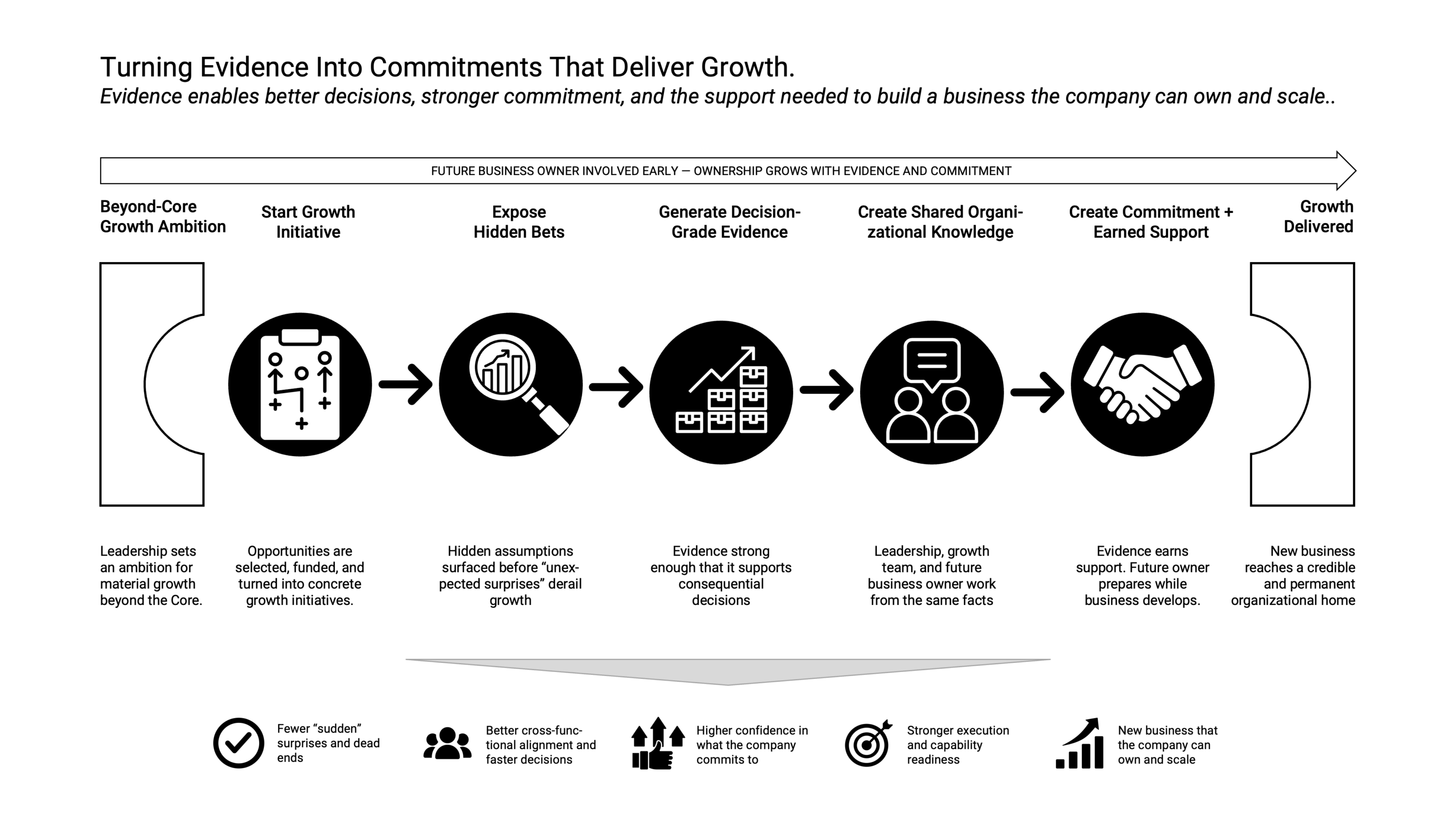
The strategy calls for growth beyond the Core. Opportunities are selected, funded, and turned into concrete growth initiatives.
They pass reviews. Customers react positively. The business case still holds.
And yet the growth is not showing up.
The Problem
Often, growth initiatives are discussed forever. The Business Unit expected to own the new business hesitates. Finance wants more certainty. Nobody wants to kill it, but nobody is ready to put real weight behind it either.
Then the harder questions surface:
A growth initiative can be approved while the company is still unprepared to support, run, and own the business.
The Opportunity
Get the people who run today’s business and the people building tomorrow’s business working on the same growth problem. Well-run BU–Innovation strategy dialogs create the space for that joint work.
Together, they work through what customers will actually buy, what Sales must be able to sell, what Operations must be able to deliver, which capabilities are missing, and what the company is prepared to put behind the opportunity.
The future organizational home becomes part of the work early. As knowledge about the new growth business improves, so does the organization’s willingness to back it and take greater ownership.
Run Effective BU–Innovation Strategy Dialogs →
The Solution
Map all assumptions — the visible and the hidden — that could still derail growth, and generate decision-grade evidence around the ones that matter most.
Then bring Leadership, the growth team, and the future business owner together to interpret what has been learned and decide what follows.
In Lean Scaleup, Triple Win connects Leadership, the Business, and the people driving new growth so that evidence can change decisions, support, and ownership.
The future business owner should be involved before handover, because Business ownership develops while the new business develops.
Some assumptions may have slipped through strategy reviews, business cases, or risk analysis because they were treated as facts.
A pilot customer saying “we like it” does not prove that Procurement will approve the price or that Service can support a broad rollout.
These are Hidden Bets when they are success-critical but remain insufficiently tested.
Is Your Growth Initiative a Hidden Bet? →
What Changes After Evidence?
Decision-grade evidence changes what the company is prepared to do.
Leadership, the growth team, and the future business owner develop a shared view of what is known, what remains uncertain, and what the company is prepared to do next.
In Lean Scaleup, this is Shared Organizational Knowledge. It becomes the basis for Commitment Decisions: what the company will fund, build, change, support, or stop.
Sales knows what needs to change. Operations knows what has to be built. Finance knows which uncertainties remain. The future owner knows what taking responsibility will require.
Make It Work for You
Start with one growth initiative where progress feels slower than the evidence would suggest.
Ask:
What does the existing evidence actually allow us to commit to?
Where are we still missing decision-grade evidence?
What success-critical assumptions might still be hidden?
What does the organization now need to understand, commit to, and change?
Related Reading
Frequently Asked Questions
Why is my growth initiative still not moving even though the pilot went well?
Because a pilot may prove only part of the business. Customers may like the solution, while Sales is unsure how to sell it, Operations cannot yet support rollout, Finance wants more certainty, or the future owner is not ready to take it on.
How do we know whether we have enough evidence to commit more money, people, and management attention?
You have enough evidence when it is strong enough to change what the company is prepared to commit to. The question is not how much evidence you have, but whether it addresses the assumptions that matter for the next decision.
Why is our Business Unit still hesitant to take ownership when customers have reacted positively?
Because positive customer feedback does not prove that the new business can be sold, delivered, supported, and run at scale. The Business Unit needs to understand what taking ownership will require in terms of capabilities, resources, operating changes, and risk.
What could still derail our initiative even though the business case and risk analysis look solid?
Risk analysis works with the assumptions you have already identified. The problem is that some success-critical assumptions may never have been made explicit or may have been treated as facts. Lean Scaleup calls these Hidden Bets when they are important enough to derail the initiative but remain insufficiently tested.
How do we get the growth team and the future business owner to work from the same facts and commit to what happens next?
Bring them into the learning and decision process together. When both sides interpret the evidence together, they build a shared view of what is known, what remains uncertain, and what each side is prepared to do next.